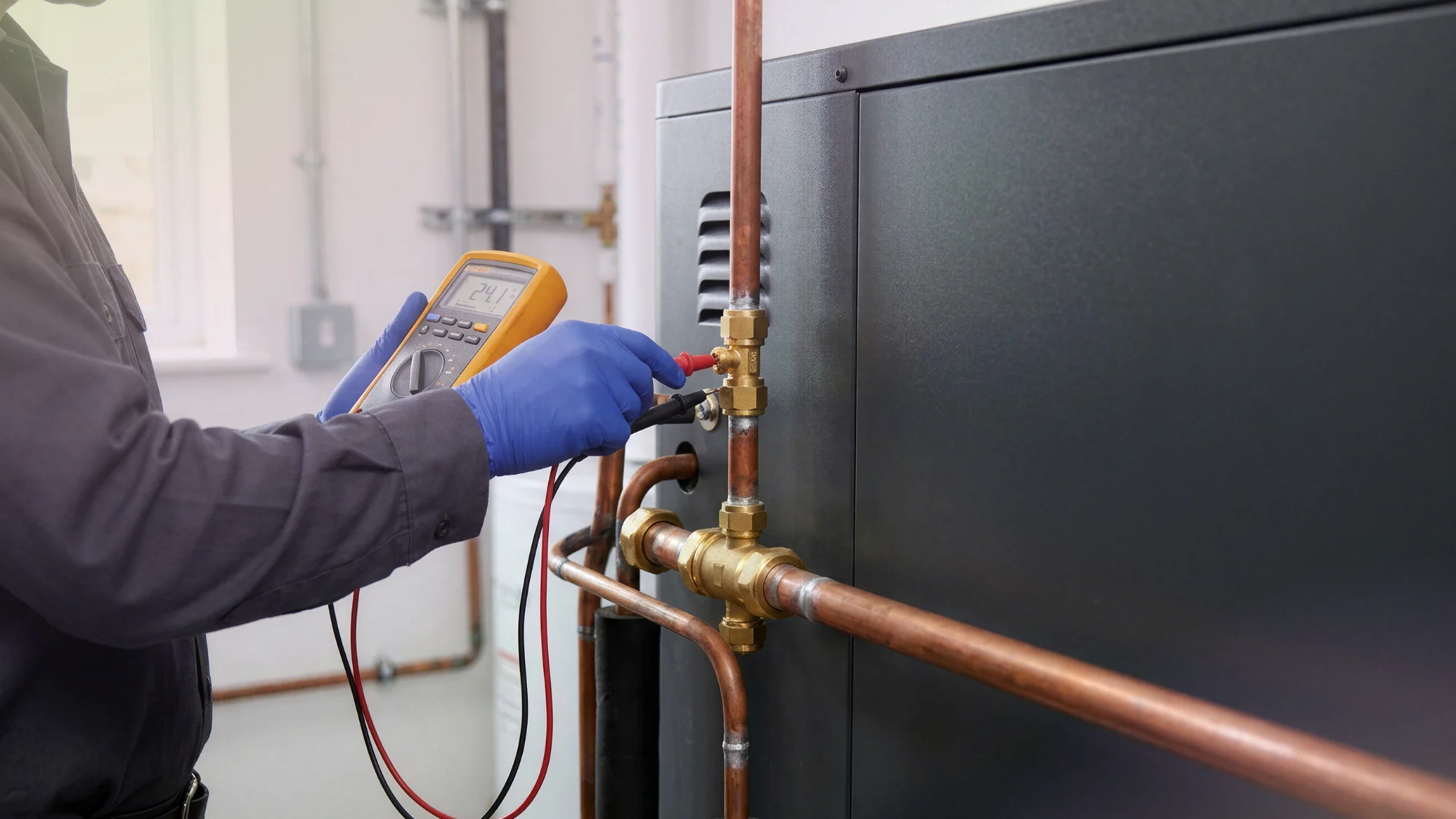
An October evening in Port Chester can be the first real test of a heat pump after months of cooling. When the thermostat changes to heating, unfamiliar sounds or slow warm-up may raise questions. Searching for “heat pump repair near me” makes sense when symptoms persist, but not every change signals a breakdown. Knowing what to observe can make a service call more productive.
First, Confirm Your System Is Heating
Set the thermostat to Heat and choose a temperature slightly above the current room reading. Give the equipment time to respond. Heat pumps often deliver air that feels less hot than furnace air, even when operating correctly.
Not sure whether your home uses a heat pump? P&M Mechanical’s guide to heat pumps and air conditioners explains how the two systems differ. Identify your equipment before describing its problem.
Five Changes Worth Recording
A single symptom rarely establishes the cause. Watch for patterns, particularly after the system has been running long enough to stabilize.
- New noises: Grinding, screeching, or repeated loud rattling can indicate mechanical trouble. Shut the system down if it sounds seriously distressed.
- Weak or uneven heating: Rooms that remain cold despite normal thermostat settings may point to airflow, controls, or equipment issues.
- Frequent starting and stopping: Repeated short cycles deserve evaluation, though thermostat settings and operating conditions can also affect cycling.
- Unexpected electricity use: Compare bills with similar weather and usage, not just the previous month. A higher bill alone does not prove a fault.
- Persistent ice: Light frost can be normal in chilly, damp weather. Thick ice that remains after a defrost cycle, or repeated icing, warrants professional attention.
A heat pump that switches to backup heat more often than usual may also deserve attention. Auxiliary heat can be normal during colder conditions, so note the outdoor temperature and whether the change repeats.
During a normal defrost cycle, the outdoor fan may stop briefly, and steam may appear. Do not scrape the coil or pour hot water over it.
Try These Safe Checks Before Scheduling
Make a simple record: outside temperature, thermostat settings, when the symptom started, and any displayed error code. Check an accessible air filter and ensure supply vents are not blocked. Clear leaves away from the outdoor unit without touching internal parts.
Avoid opening electrical compartments or handling refrigerant lines. If you notice burning odors, sparking, or unusual electrical behavior, stop using the equipment when safe and arrange prompt service.
P&M Mechanical recommends twice-yearly heat pump maintenance to support systems that provide both cooling and heating. A fall visit can identify service needs before colder weather increases demand. Ask which checks are included and whether the technician will review airflow, electrical connections, and defrost operation as applicable to your model.
Ask What the Diagnosis Means
When a “heat pump repair near me” search leads to an appointment, ask the technician what tests support the diagnosis. Request an explanation of proposed parts, labor, timing, and whether the system can safely operate until work begins.
Sometimes a repair is appropriate; for aging equipment with repeated breakdowns, replacement may deserve discussion. P&M Mechanical’s repair-versus-replacement guidance explains factors homeowners can weigh. Its maintenance plans also include options specifically for heat pump systems.
If a written proposal is helpful, you can request an estimate with your equipment details and observed symptoms.
Get Help Before a Cold-Weather Failure
The purpose of noticing warning signs early is to make an informed decision, not assume every unusual sound means replacement. For Port Chester homeowners seeking “heat pump repair near me”, P&M Mechanical offers heat pump repair and maintenance in Westchester and Fairfield counties. Contact P&M Mechanical or call 914-621-2401 to describe the issue and arrange an evaluation.